« Fed Watching! | Home
By Mike Conlon | April 26, 2011
Tomorrow will the be the first of the new, transparent Fed where Bernanke will attempt to get out in front of the population and attempt to get people to suspend their disbelief. While the Fed Chairman is clearly on the wrong side of public opinion with QE2 and the inflation it has caused, trying to convince people that what they are feeling in the economy is wrong just won’t work.
The reason is because there will be no truth to go along with the transparency. It will be very difficult to sway public opinion that there is no inflation when people see it in their daily lives. The debate over which metric of CPI to use to see the true effects of policy have left people with a lack of confidence in those in power. How this speech tomorrow will change this sentiment is anyone’s guess.
So in my opinion this will all amount to much ado about nothing, with the markets hanging on every word spoken, though I don’t think we will learn anything new.
Europe is open again after yesterday’s holiday and European stocks are higher as are US equity futures to start the day. Asian stocks were lower as are commodities, though today can’t be classified as either a risk-taking or risk-averting day.
In the forex market:
Aussie (AUD): The Aussie is higher as interest rate differentials and carry trades are driving market sentiment despite mild risk taking in the marketplace. An index of leading indicators came in higher than expected.
Kiwi (NZD): The Kiwi is the biggest gainer this morning ahead of tomorrow’s rate policy decision as maybe the market is sensing that the RBNZ could turn hawkish again. While the current expectation is the rates will be left unchanged, the added benefit of Dollar weakness has been driving price action.
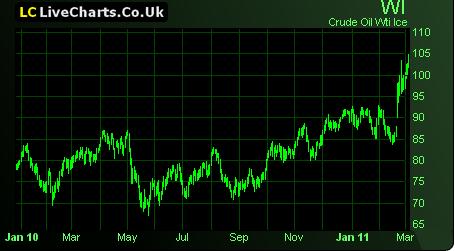
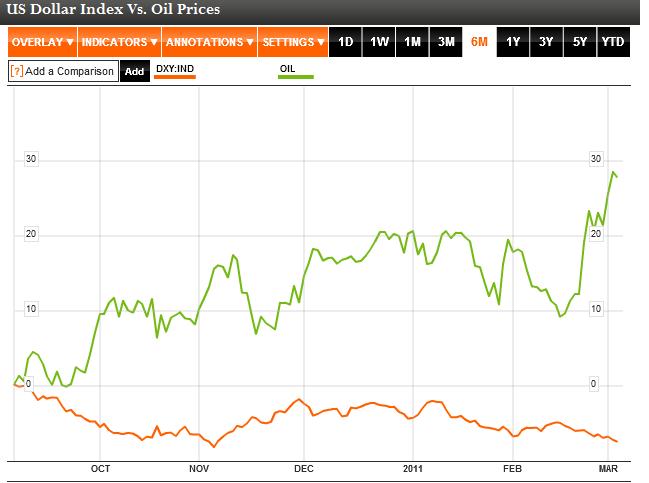
Loonie (CAD): The Loonie is also mostly higher despite oil prices pulling back to just above $112. Friday’s GDP report will give more clarity into the Canadian economic situation.
Euro (EUR): The Euro is mixed this morning as both Dollar and Yen are weaker, though reports about a possible Greek debt restructuring have left the market un-phased. CPI data due out tomorrow is expected to show higher inflation.
Pound (GBP): The Pound is lower across the board ahead of tomorrow’s GDP report. CBI business optimism figures came in slightly lower than expected, and perhaps the distraction of the Royal wedding later this week has left the markets unimpressed with the Pound. (Click chart to enlarge)

Dollar (USD): The Dollar is weaker across the board ahead of tomorrow’s Fed meetings. There is increased speculation that the Fed will somehow try to continue to support the economy even though QE2 is expected to end in June. Consumer confidence figures are due out later this morning.
Yen (JPY): The Yen is also lower as the expectation of continued weak monetary policy has pushed traders toward higher yielding currencies. Retail sales figures are expected to show big declines later this evening, ahead of Thursday’s rate decision.
While I expect little in the way of learning something new tomorrow from the Fed, there is always the possibility of a surprise. However, the Fed has been pretty clear about its stance and its denials of inflation so I highly doubt that will change anytime soon.
But the market may be more concerned with how the Fed plans to exit QE2 and what that will do to the economy. What is clear is that the Fed needs to pick up the slack for the inaction occurring on the fiscal side of the equation, with politicians in Washington unable to work together.
Don’t expect to walk away from this new Fed format tomorrow with a warm and fuzzy feeling about the direction the US is going, and continue to be cautious. While there is always major volatility surrounding the FOMC meetings, I could see tomorrow turning out to be one big dud.
To learn more about how you can take advantage of world events through the currency market, be sure to check out our currency trading courses!
To follow these events live with a free, real-time practice account, click here! Don’t miss out on the world’s fastest growing market!
?
Tags: account, AUD, Aussie, blog, cad, course, currenc, currencies, currency, currency trading, dollar, economy, EUR, Euro, forex, forextrading, free, fx, fxedu, gbp, Il, jpy, market, Mike Conlon, nzd, practice, ssi, time, trade, USD, Yen
Topics: What To Look At In The Market |
CommentsPowered By WizardRSS.com | Full Text Feed | Amazon Affiliate


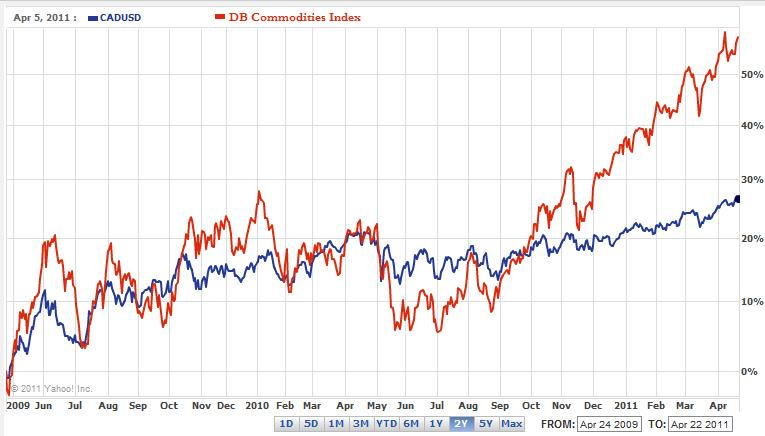
 Consider also that Canada now imports more than it exports, and that the Canadian balance of trade recently dipped into deficit for the first time since records started being kept 40 years ago. Its current account has similarly plunged, as Canadians have had to finance this through loans and investment capital from abroad. Based on the expenditure approach to GDP, trade actually detracts from Canadian GDP. Any way you perform the calculations, commodities are hardly the backbone of its economy, account for about 15% at most.
 As if that weren’t enough, the press is full of stories of Canadians that think their own currency is overvalued. Businesses complain that they can’t compete, and that banks won’t lend them the money they need to upgrade their facilities and become more efficient. Meanwhile consumers whine about higher prices in Canada, compared to the US. I think it’s very telling that their is now a 2-hour wait to cross the border from Vancouver, and shopping malls on the American side have reported a huge jump in business. Even the famous Big Mac Index shows that the price of a hamburger was already 12% higher in Canada back when the loonie was still hovering around parity with the US Dollar.


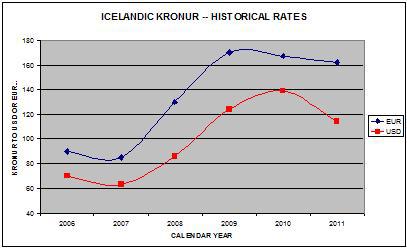
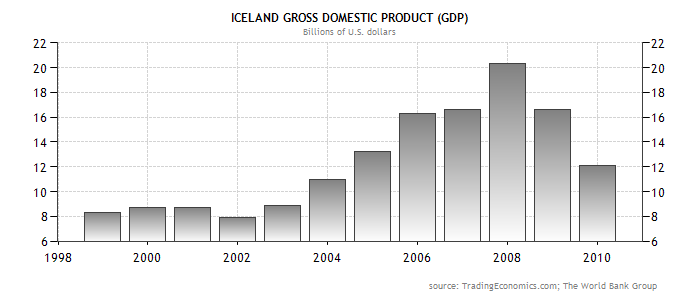
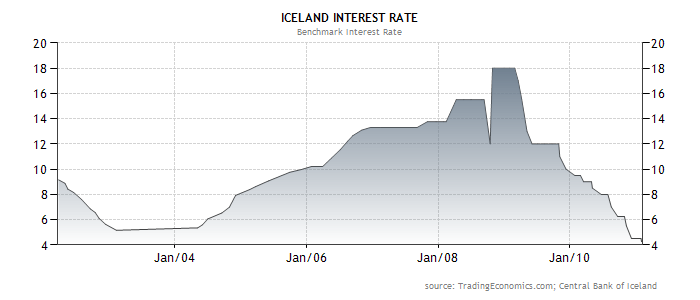 Now that the carry trade is making a comeback, it’s probably a good time to take a step back and re-assess the risks of such a strategy. Even if Iceland proves to be an extreme case â€" since most countries won’t let their banks fail â€" traders must still acknowledge the possibility of massive currency depreciation. In other words, even if the deposits themselves are guaranteed, there is an ever-present risk that converting that deposit back into one’s home currency will result in losses. That’s especially true for a currency that is as illiquid as the Kronur (so illiquid that it took me a while to even find a reliable quote!), and is susceptible to liquidity crunches and short squeezes.

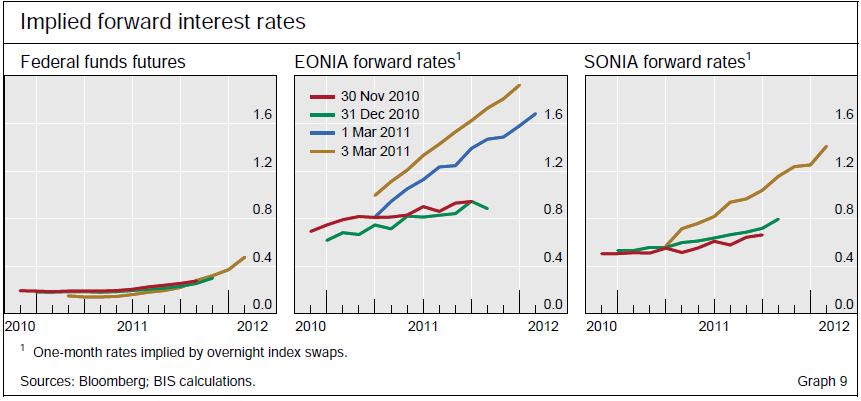




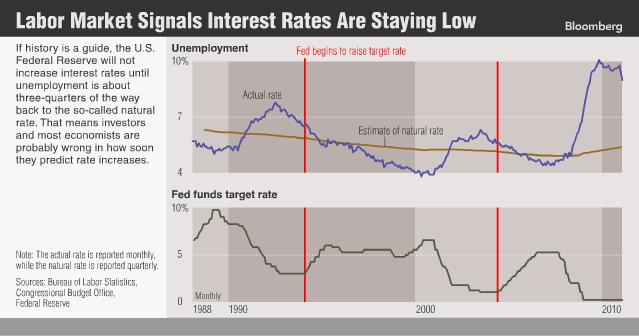
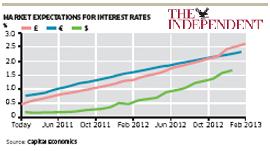 Emerging markets countries can only toy with inflation for so long. Over the medium-term, all of them will undoubtedly be forced to raise interest rates. The time horizon for G7 Central Banks is a little longer, due to high unemployment, tepid economic growth, and price stability. At a certain point, however, inflation will compel all of them to act. When they raise rates â€" and by much â€" may well dictate the major trends in forex markets over the next couple years.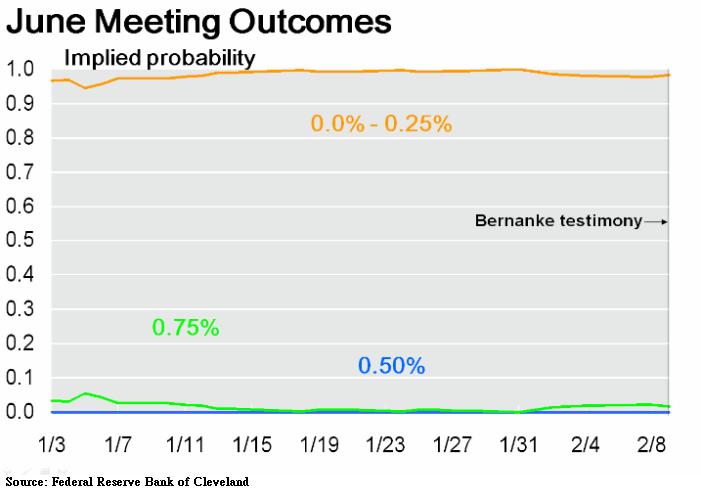


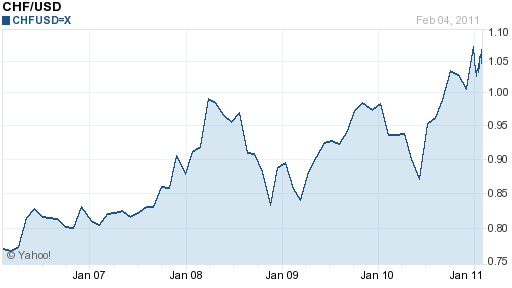
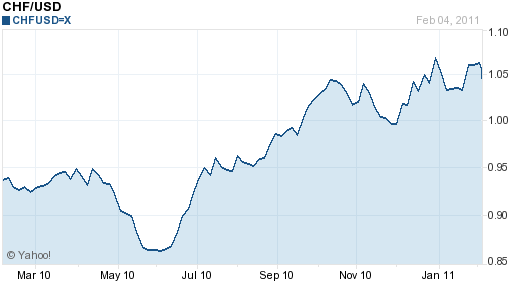 The forces behind the Franc’s rise are easily identifiable. It basically comes down to risk aversion. While it can’t compete with the Dollar and Yen â€" its main safe haven rivals â€" in size and liquidity, it benefits from its perceived economic and fiscal stability, as well as through contradistinction with the surrounding Eurozone. In fact, the Franc’s rise against the Euro has been even steeper than its rise against the Dollar. As the Eurozone crisis radiates further away from Greece, Switzerland has come to seem more like an island in a sea of chaos.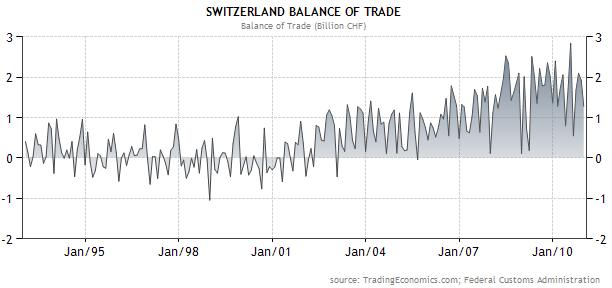
 RSS Feed (xml)
